Cats at the Helm: A Feline-First Guide to Boating Out of Dana Point Harbor

Photo: Unknown, Public domain, via Wikimedia Commons
Spend a Saturday morning walking the docks at Dana Point Harbor and you'll spot plenty of dogs in life vests, tongues flapping in the sea breeze. What you might not expect is the occasional cat perched calmly on a sailboat's cockpit bench, eyes half-closed, taking it all in. It happens more often than you'd think — and if you've ever wondered whether your own cat could join you on the water, this one's for you.
The honest answer up front: some cats genuinely love boating, and some absolutely do not. Knowing the difference before you untie from the dock is the single most important thing you can do for your cat's safety and sanity (not to mention yours).
Is Your Cat Actually a Boat Cat? A Vet's Honest Take
From a veterinary standpoint, temperament matters far more than breed. We look for three traits when evaluating whether a cat might enjoy onboard life:
- Curiosity over fear. A cat who investigates new objects rather than bolting from them tends to adapt better to a moving, noisy environment.
- Tolerance for handling. Boating means harnesses, being picked up, and possibly a life jacket. Cats who resent restraint usually hate every minute of it.
- Resilience to noise and motion. If your cat hides during thunderstorms or panics in the car, a rocking hull and engine rumble are probably a hard pass.
Age plays a role too. Confident young adults often adapt most easily, while senior cats with arthritis may struggle with a boat's uneven footing. If your cat is the type to spend visitors' entire stays under the bed, leave them ashore with a sitter — there's no shame in it, and forcing the experience can create lasting anxiety.
Feline Life Jackets: Yes, They Exist
Dog-specific flotation devices won't cut it for a cat. Cats have different body proportions, and a poorly fitted vest can restrict movement or slip off in the water. Look for a cat-specific PFD (personal flotation device) with:
- A handle on top for quick grab-and-lift rescues
- Adjustable straps that snug down on a small frame
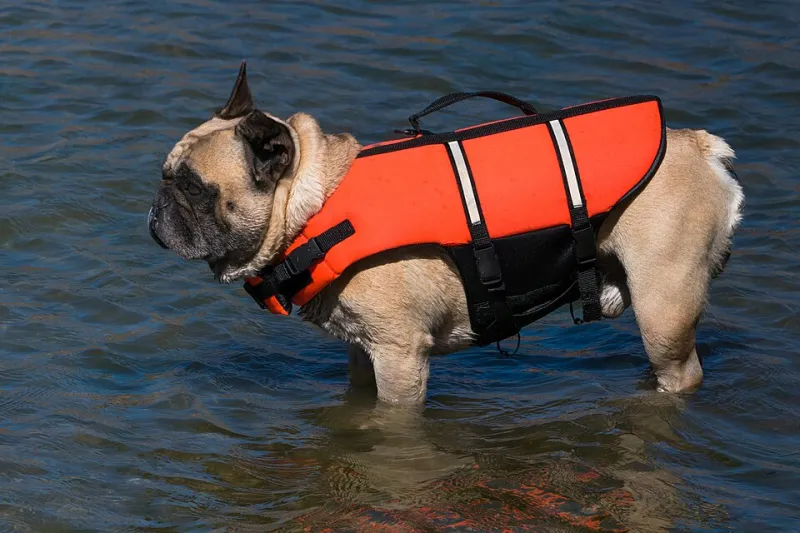
- Bright colors for visibility in chop
- A design that leaves the legs free — a cat who can't walk will flop and panic
The real secret? Training before you ever leave the dock. Let your cat wear the vest indoors for short, treat-filled sessions until they can move normally in it. A cat who associates the jacket with snacks will tolerate it far better than one who's suddenly strapped in at the marina.
Motion Sickness in Cats Is Real
Cats get seasick just like people do. Signs include excessive drooling, lip licking, vocalizing, vomiting, and unusual stillness or hiding. If your cat has a history of car sickness, assume boat travel may trigger it too.
What helps:
- Start with short trips. A 30-minute harbor cruise tells you more than a full-day outing ever could.
- Keep them low and centered. Motion is mildest near the middle of the boat, close to the waterline of the hull.
- Withhold a big meal beforehand. Feed a small portion a few hours before departure.
- Talk to your vet about medication. Anti-nausea options exist for cats, but dosing is very specific — never use a product labeled for dogs or humans without veterinary guidance.
Building a Safe Zone Onboard
Cats need a retreat, and a boat offers few natural hiding spots — so create one. A secured carrier, a soft-sided crate, or a den made from a storage bin lined with a familiar blanket gives your cat somewhere to decompress when the wind picks up or a pod of dolphins steals the show.
Other must-dos:
- Close all hatches and rail gaps before letting your cat out of the carrier. Cats squeeze through impossibly small spaces, and a fall overboard is the nightmare scenario.
- Use the harness below deck, leash on deck. A well-fitted cat harness and leash is your backup if the life jacket handle isn't enough.
- Watch the deck temperature. Dark fiberglass in Southern California sun can burn paw pads fast. Test it with your hand; if you can't hold it for five seconds, your cat shouldn't walk on it.
- Fresh water, always. Salt air is dehydrating, and a panting, overheated cat is an emergency.
The Litter Box Question, Solved
Yes, your cat can do their business on a boat — with planning. A small travel litter box with a lid (or high sides) keeps contents contained as the boat rocks. Low-dust, clumping litter minimizes mess in a confined space, and securing the box to the floor with non-slip matting or Velcro prevents sliding.
Position it in the head (bathroom) or a low-traffic corner, and scoop promptly — odors intensify quickly in a small cabin. For day trips, many cats will simply hold it, but never count on that; stress and holding urine can contribute to urinary issues, especially in males.
Know When to Stay Ashore
Even with perfect preparation, some cats will never enjoy the water — and that's okay. If your first few outings involve hiding, hissing, vomiting, or frantic attempts to escape, listen to your cat. A happy cat at home beats a miserable cat at the helm every time.
For the felines who do take to it, though? A sunset cruise through the harbor with a contented cat curled up beside you is about as coastal-California as it gets. If you're unsure whether your cat's temperament or health is up for a boating adventure, schedule a checkup first — we're happy to give you a straight answer before you ever leave the dock.