When the Lights Stay On: A Night Shift Behind the Scenes at Your Neighborhood Vet Hospital
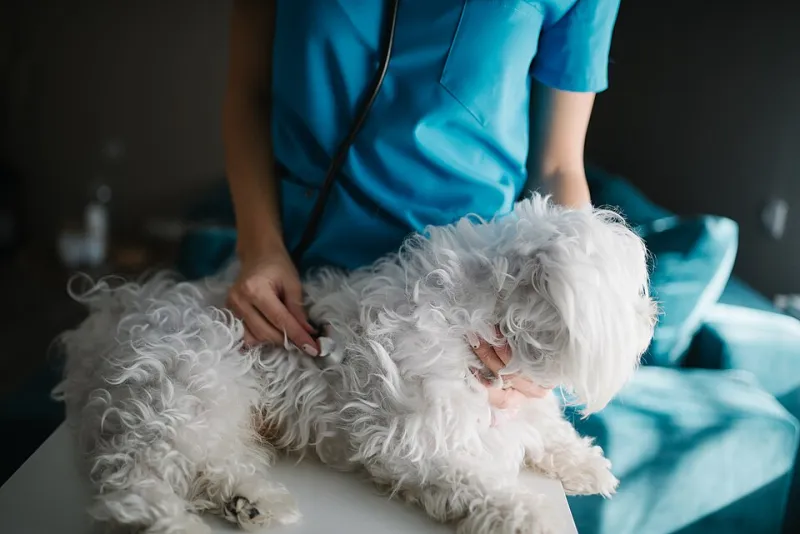
Photo: Nenad Stojkovic, CC BY 2.0, via Wikimedia Commons
Most pet owners only see the daytime version of a veterinary hospital: the waiting room with the water bowl, the exam room with the scale, the friendly checkout wave. But when the last appointment leaves and the front doors click shut around 6 p.m., the building doesn't go dark. Somebody is still there. Somebody is still watching.
If your pet has ever stayed with us overnight, you've probably driven past the harbor at dusk and wondered what's happening inside. Here's an honest look at a typical night shift — no sugarcoating, no jargon walls.
7 P.M.: The Handoff
The evening starts with a conversation. The daytime technician walks the overnight team through every patient still in the hospital: the twelve-year-old lab recovering from a foreign-body surgery, the cat with pancreatitis on a fluid drip, the young spaniel who ate an entire sock at Doheny State Beach and is waiting to see if it passes.
Each patient gets a written plan — medications, fluid rates, warning signs to watch for — but the verbal handoff matters just as much. "He's been restless since 4" is the kind of detail that doesn't always make it onto a chart, and it's often the detail that matters at 2 a.m.
What Overnight Monitoring Actually Looks Like
There's a misconception that overnight care means someone sleeping in a back room with one ear open. A real hospital night shift looks more like this:
- Scheduled checks every one to two hours, or more frequently for critical patients. Vital signs, IV lines, pain scores, appetite — all logged each round.
- Fluid pump and medication alarms, which don't care that it's 3 a.m. When one goes off, someone walks down the hall to reset it.
- Comfort rounds: repositioning large dogs so they don't get pressure sores, offering a little warmed food to a picky convalescent cat, slipping a blanket under a shivering patient.
- Walk breaks for post-op dogs in the outdoor run, because holding it all night helps nobody's recovery.
Some nights are quiet — a few rounds, a few charts, a lot of laundry. Others aren't. The emergency call might come at any hour.
11:47 P.M.: The Call That Changes the Shift
Overnight hospitals and on-call teams exist for moments like this: a caller whose dog's abdomen has swollen tight and hard within a few hours. That description — a bloated, retching, restless large-breed dog — raises an immediate red flag for gastric dilatation-volvulus, or bloat, one of the most time-sensitive emergencies in veterinary medicine.
This is the core answer to "why does overnight care matter?" Some conditions are survivable at 11 p.m. and fatal by 7 a.m. Bloat, toxin ingestion, difficult labor, urinary blockages in male cats, severe trauma from a late-night traffic accident — the clock is part of the disease.
When the patient arrives, the night team runs triage: quick vitals, pain assessment, an IV catheter, imaging. From there it's stabilize, monitor, and communicate with the surgeon or the on-call veterinarian about whether the operating room needs to open tonight.
Which Pets Typically Need Overnight Observation?
Not every hospital stay requires a night nurse, but certain situations almost always do:
- Post-surgical patients, especially seniors or brachycephalic breeds (think pugs and bulldogs) whose airways need watching as anesthesia wears off
- Patients on continuous IV fluids or medication drips, like kidney failure or pancreatitis cases
- Uncontrolled pain or nausea that hasn't settled yet
- New diabetics starting insulin, whose blood glucose needs close tracking
- Any pet whose condition is still being figured out — overnight trends in temperature, heart rate, and appetite often reveal the diagnosis before morning
If your pet is hospitalized, it's completely fair to ask: "Who is physically in the building tonight, and how often will my pet be checked?" A good hospital will answer plainly. Some general practices transfer critical overnight cases to a 24-hour emergency facility; others staff their own night shifts. Knowing which is true of your vet — before you need it at midnight — is one of the smartest things a pet owner can do.
The Quiet Hours Have a Human Cost, Too
It's worth saying plainly: the people who work overnights are doing something most of us couldn't. They miss their own families' evenings and holidays. They comfort crying owners over the phone at 2 a.m. They lose patients sometimes, and then walk into the next kennel and keep going.
They also get the small moments nobody else sees — the post-op dog who finally sleeps stretched out instead of curled tight, the cat who starts eating at midnight, the sock, miraculously, passing on schedule. Ask any night-shift tech why they stay, and it's those moments.
What You're Paying For When the Front Desk Closes
Overnight hospitalization isn't cheap, and it's fair to want to know why. You're not paying for a room. You're paying for trained eyes on your pet every couple of hours, equipment that runs all night, medications delivered on schedule, and the ability to act within minutes if something changes.
Sometimes the honest answer is that your pet doesn't need it. A stable, healthy young dog after a routine dental may do fine resting at home with pain meds and clear instructions. A good veterinary team will tell you that too. Overnight care is a tool, not a default — and knowing when it's genuinely needed is part of the medicine.
Before You Ever Need Us at Midnight
Three things every Dana Point pet owner should do this week:
- Save your vet's after-hours number in your phone right now, not during an emergency.
- Know where the nearest 24-hour emergency animal hospital is and how long it takes to get there.
- Ask at your next visit how overnight monitoring works at your practice.
The harbor is beautiful and quiet after dark. But for a small team of night-shift vets and technicians, quiet just means everything is going the way it should — and they'll be there, coffee in hand, checking one more chart before the sun comes up over the water.