The Unremarkable Walk: Why a Dull Loop Around the Marina Might Beat Another Beach Day
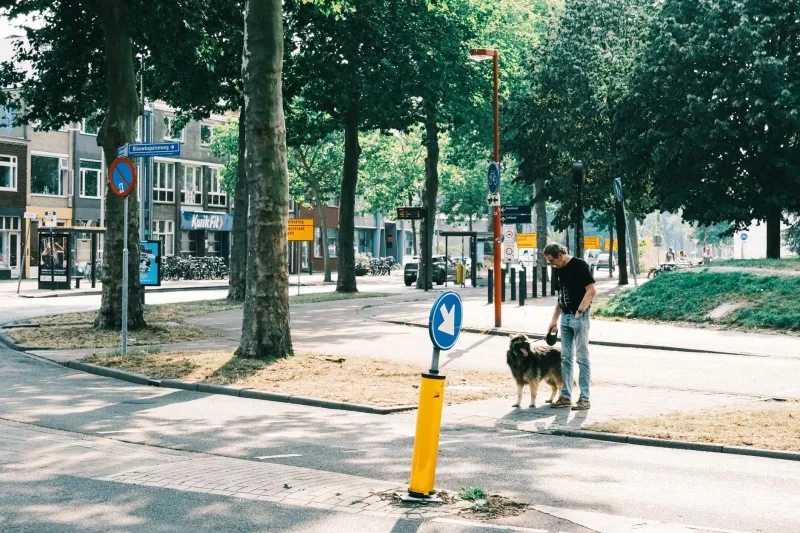
There is a particular kind of Dana Point dog owner who has never once taken the easy route. Every day is an event. Monday it is the sand at Doheny. Tuesday a long rocky scramble. Wednesday the paddleboard, Thursday a new trail, Friday a dog park meetup, and somewhere in there a two-mile run along the water because the weather app said it was only seventy-two.
I want to make a case for the opposite. Not instead of adventure — alongside it, sometimes instead of it. I want to make a case for the walk where nothing happens.
The beach-day arms race
Somewhere in the last decade, dog ownership picked up a productivity mindset. Enrichment became a checklist. A walk that was not long, novel, and Instagram-worthy started to feel like a shortfall. If your dog isn't tired at the end of the day, are you even trying?
That framing has it backwards. A tired dog is not automatically a fulfilled dog, and a dog who is flattened by every outing is often a dog who spent the afternoon over threshold, not one who had a great time.
What overstimulation looks like in a harbor dog
High-stimulation environments are not just physically demanding; they are cognitively expensive. The beach brings wind, birds, other dogs, children, crashing surf, seaweed, dead things to roll in, and constant decisions about what to approach and what to avoid.
A dog who has been overstimulated often comes home and falls apart in a very specific way: they cannot settle. They pace. They drink too much water and then vomit it. They're snappy with the other pets in the house. They wake up at 2 a.m. and click their nails across the floor. Some dogs get the zoomies; some get the opposite and shut down. The next day, they're cranky on the leash and reactive at the gate, and nobody connects it to Tuesday's four-hour beach epic.
That is not a behavior problem. That is a dog who has run out of bandwidth.
The case for the same old loop
Here is what a boring walk actually does.
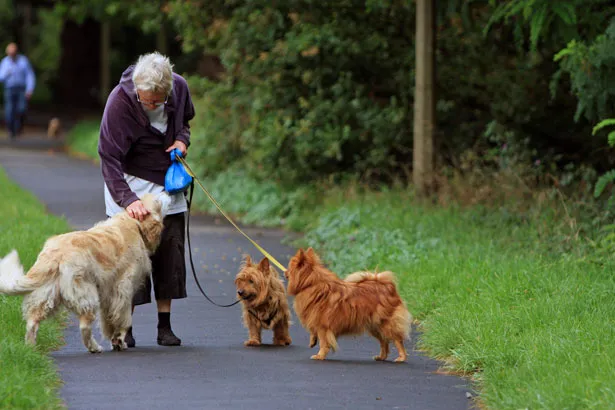
Sniffing lowers arousal. It is not exercise in the cardio sense; it is information gathering, and for a dog it is closer to reading the news with a cup of coffee than to running a race. Fifteen or twenty minutes of unhurried sniffing on a long line can do more for a nervous dog's resting heart rate than an hour of fetch.
Predictability regulates. The same route, walked at the same time, teaches a dog what comes next. There is a corner, then a trash can, then the spot where the cat sits, then home. That rhythm is deeply reassuring to an animal whose whole nervous system is built around anticipating what happens next.
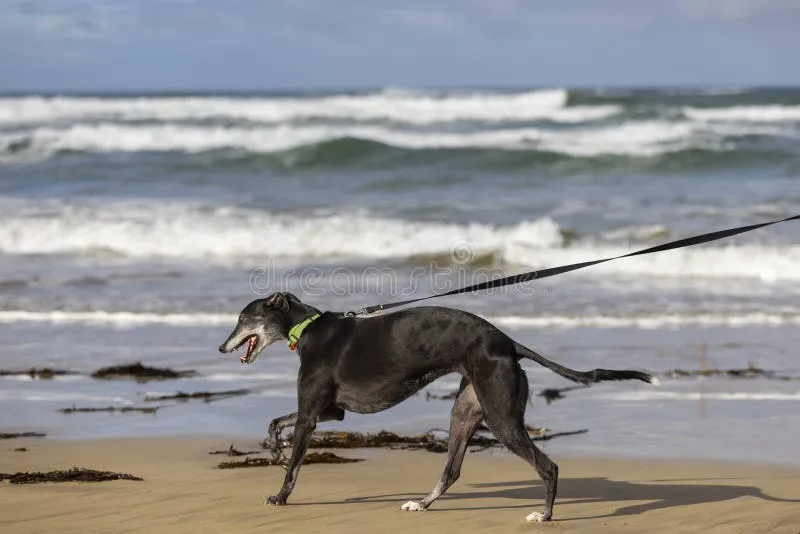
And it is easy on the body. Sand is soft in a way that feels kind and is actually work — an unstable surface that loads the toes, wrists, and hips differently than pavement. A dog who does it daily is a dog doing daily agility on an uneven, sloping surface, often in the heat of the day. Add a chaser toy and a few hard stops and you have a recipe for a soft-tissue strain that shows up three weeks later as a reluctance to jump into the car.
The older dog has already figured this out
If you have a senior dog, you may have noticed they are no longer interested in the beach marathon. That is not laziness and it is not depression. It is a reasonable adult setting boundaries.
Aging joints do better with short, frequent, low-impact movement than with weekend heroics. A gentle loop with time to sniff gives an older dog mental stimulation without the pounding, and it lets them choose their own pace in a way a beach full of off-leash dogs simply does not. Evening or early morning walks in the cool air are kinder than noon in the sun, and a shorter route means less chance of having to carry a ninety-pound dog the last three blocks.
If your older dog is suddenly reluctant to walk at all, that is worth an exam rather than a schedule change. Reluctance can be arthritis, but it can also be dental pain, cardiac changes, or an early neurologic issue. Slowing down is normal with age. Stopping is a question for us.
How to make a dull walk interesting for the dog
Boring is not the same as empty. A few small adjustments turn a routine loop into a genuinely satisfying one:
- Use a longer line where it is legal and safe. More sniffing space means more mental work.
- Go at their pace. A walk where the human sets the speed is a march. A walk where the dog sets it is enrichment.
- Change the time, not the place. Same loop at 6 a.m. smells completely different than the same loop at 5 p.m.
- Let them stop. The fire hydrant is the destination. There is no schedule.
- Pick a low-traffic route. Fewer dogs to greet means fewer decisions to make and a lower overall load.
Where the beach still fits
None of this is an argument against the ocean — we live here, and our dogs love it. It is an argument against the assumption that bigger is always better, every single day. A great week can include one real adventure, a couple of medium outings, and four unremarkable walks. Most dogs are healthier and calmer on that pattern than on seven days of peak stimulation.
Let the harbor loop be enough sometimes. Sniff the same pole. Come home. Take a nap. That is a good day for a dog.